Panthera onca augusta: The Giant Jaguar of Pleistocene America
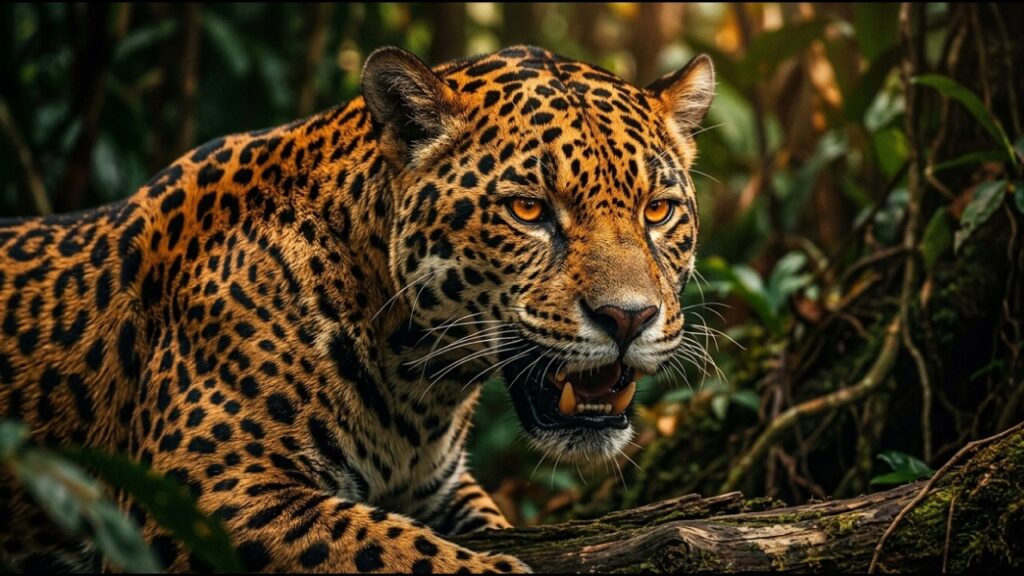
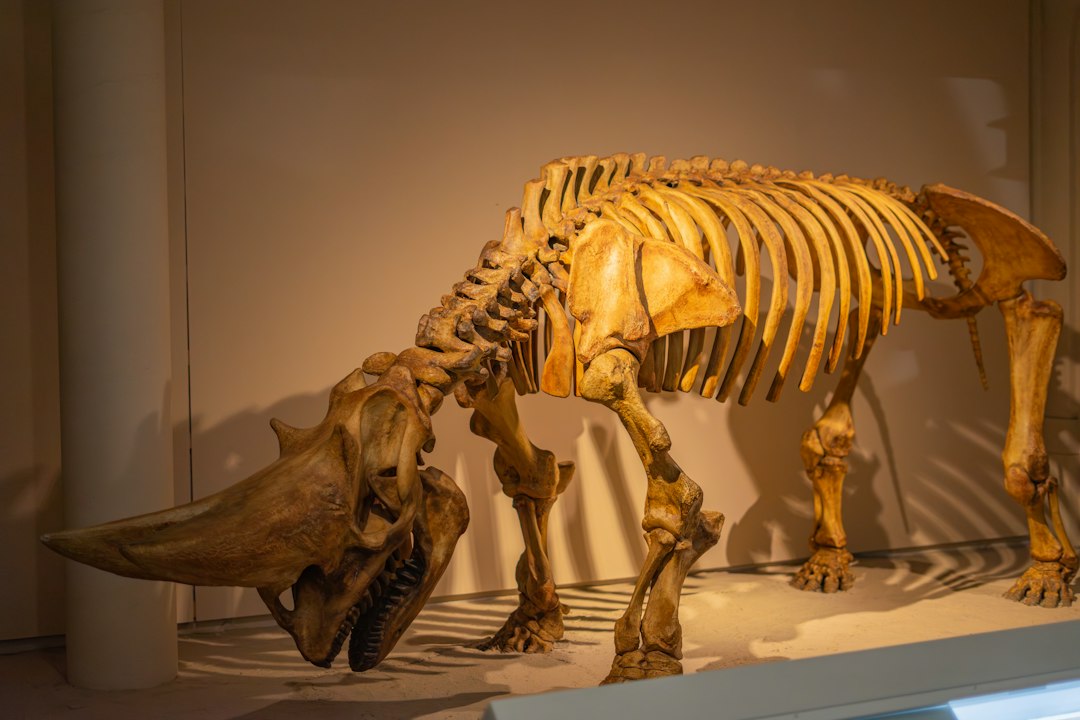
Today’s jaguar is already one of the most formidable hunters in the Americas, but its living form is only the surviving branch of a much older story. During the Pleistocene, a larger jaguar form known as Panthera onca augusta occupied parts of North America. Fossil evidence suggests an animal built on the same basic blueprint as the modern jaguar, but with a heavier body, a broader skull, and the capacity to tackle prey unavailable to smaller predators.
A Jaguar Built for Power
Estimates based on fossil remains place many adult giant jaguars above 100 kilograms, with some reconstructions approaching 129 to 130 kilograms. These figures carry unavoidable uncertainty because paleontologists often have to estimate body mass from incomplete skeletons and compare different specimens. Even with that caution, the overall pattern is clear: the North American Pleistocene form was generally more robust than the average jaguar living today.
The skull provides the strongest evidence of its specialized power. It was broad and deep, with expanded cheek arches that supported large jaw muscles. The short, heavily built jaws concentrated force at the canines, while robust limb bones helped the cat hold struggling prey. The anatomy points not to a long-distance chaser, but to an ambush predator that depended on stealth, a sudden attack, and a decisive bite.
The Jaguar’s Distinctive Killing Method
Jaguars are unusual among living big cats because they can kill by biting through or into the skull of prey. Lions commonly rely on prolonged throat holds, while tigers often target the throat or neck. The jaguar’s compact skull and powerful muscles allow it to direct exceptional pressure toward the head when the opportunity arises.
In the giant form, that same strategy may have been amplified. A wider skull and more powerful jaw musculature would have helped it subdue animals that could injure a less heavily built hunter. The technique also conserved energy: a precisely placed bite could end a struggle quickly, reducing the danger of prolonged contact with a large and powerful victim.
Life in a Lost American Landscape
Roughly 100,000 years ago, parts of Florida and other regions of North America contained a mosaic of open grassland, wetlands, river corridors, and subtropical woodland. These habitats supported an extraordinary range of large mammals. Mastodons browsed through forests, mammoths crossed open country, and giant ground sloths moved among vegetation with bodies weighing several tons. Horses, camels, tapirs, peccaries, and enormous bison added still more potential prey to the landscape.
A young ground sloth or another vulnerable herbivore could have been an opportunity for a large jaguar, especially near cover. Dense vegetation along rivers and woodland edges would have allowed the cat to approach unseen, neutralizing the speed advantage of animals that could escape it in open terrain. Its likely role was that of a solitary ambush specialist, controlling a territory and avoiding unnecessary fights with other adults.
Evidence from the Fossil Record
Some of the most important evidence comes from the Rancho La Brea tar deposits in California. For thousands of years, animals approaching pools of surface water became trapped in sticky asphalt. The deposits preserved bones from a remarkable community, including horses, bison, mammoths, dire wolves, and saber-toothed cats. Jaguar remains are less abundant and are often incomplete, but their size and proportions contribute to the picture of a robust North American form.
Florida fossil sites add another part of the story. Jaguar bones recovered from river deposits and cave or karst environments show that the animal persisted in the Southeast across substantial spans of time. Comparisons among specimens from California, Florida, and other locations reveal recurring traits: broad skulls, sturdy jaws, and limb bones consistent with a heavier body.
Its classification remains a subject of scientific discussion. Some researchers regard the form as a distinct subspecies, while others have questioned whether the fossil differences are sufficient for a separate taxonomic designation. Variation among modern jaguars makes the issue more complex. The debate does not erase the central discovery: Pleistocene jaguars in North America included exceptionally large individuals and populations with anatomy unlike the typical modern animal.
One Predator Among Many
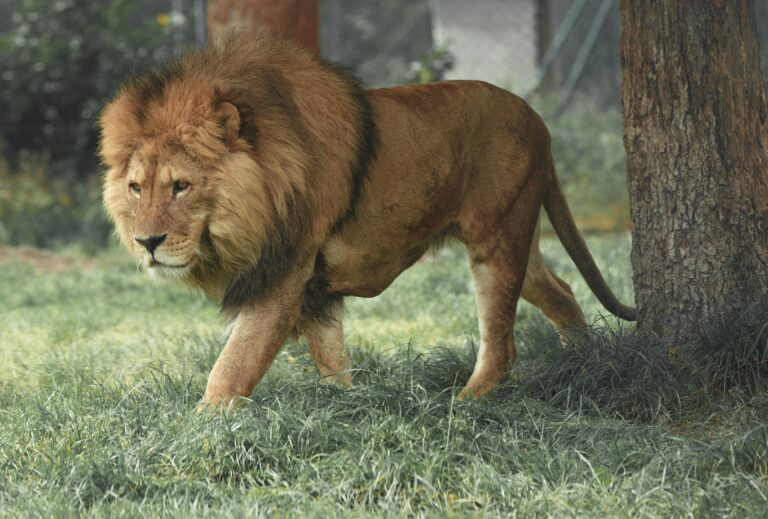
The giant jaguar did not rule an empty world. It shared the continent with several large carnivores, each shaped by a different hunting strategy. Smilodon fatalis used massive forelimbs and elongated canine teeth to tackle large prey. The American lion, Panthera atrox, was considerably larger and appears to have been better suited to more open habitats and pursuit. Dire wolves may have hunted cooperatively, while the short-faced bear could travel widely in search of food.
This crowded predator community was possible because the animals did not all use the landscape in the same way. The giant jaguar’s advantage lay in wooded areas, wetland margins, and river corridors where cover made a close ambush possible. Its strength was not speed across a plain, but the ability to turn concealment and a powerful first strike into a rapid kill.
From Asia to the Americas
The jaguar lineage has deep roots in the Old World. Ancestral pantherines evolved in Eurasia, and jaguar-like cats eventually reached North America through Beringia, the land bridge that once connected Siberia and Alaska. The timing and precise identity of the earliest forms remain debated, but the broad evolutionary pattern is well established: an ancestral population entered North America, spread southward, and adapted to a continent filled with unfamiliar opportunities.
In North America, abundant large prey may have favored greater body size and stronger jaws. Farther south, jaguar populations followed different ecological paths through forests, wetlands, and tropical landscapes. The modern jaguar is therefore not the beginning of the lineage, but the surviving result of a long history of expansion, isolation, adaptation, and ecological change.
Why the Giant Jaguar Disappeared
Near the end of the Pleistocene, the American megafauna underwent a rapid and devastating decline. Mammoths, mastodons, giant ground sloths, horses, camels, dire wolves, saber-toothed cats, and many other large mammals vanished within a relatively short geological interval. The giant jaguar disappeared in the same broad transformation.
No single explanation has been proven for every extinction. The climate shifted as the last Ice Age ended, glaciers melted, sea levels rose, and rainfall and vegetation patterns changed. At the same time, human populations spread across the continent and hunted animals that had never faced a technologically equipped predator. Many researchers favor a combined explanation in which climate stress and human pressure weakened megafaunal populations together.
A large predator would have been especially vulnerable to this disruption. An animal weighing more than 100 kilograms needs a dependable supply of substantial prey. As those prey populations shrank and habitats became fragmented, the energy needed for survival and reproduction became harder to obtain. Smaller and more flexible jaguars, able to live on a wider range of prey in forested environments, had a better chance of enduring the transition.
The Living Legacy
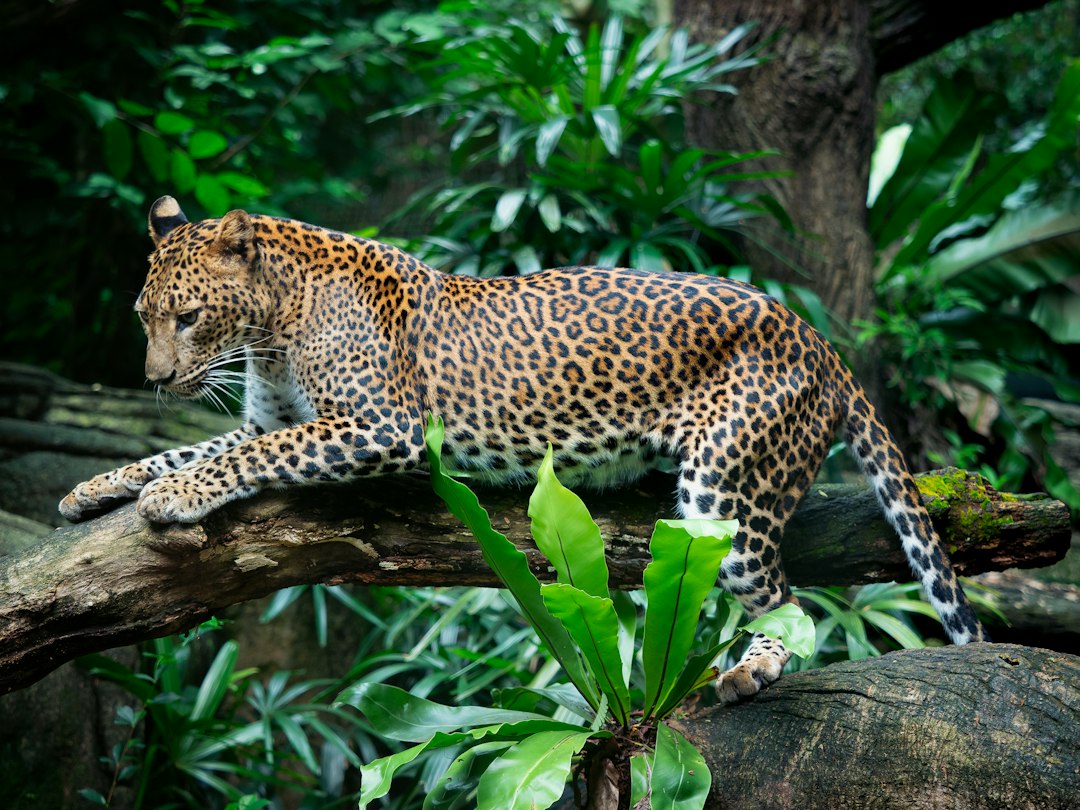
The modern jaguar retains the essential design of its giant predecessor: a solitary life, stealthy movement through dense cover, a sudden attack, and extraordinary jaw strength relative to body size. It can hunt deer, peccaries, reptiles, turtles, and caimans, adjusting its diet to the opportunities available in each habitat.
That flexibility helped the species survive, but survival is not security. Modern jaguars have lost much of their historical range, and deforestation, prey depletion, roads, conflict, and habitat fragmentation continue to isolate populations. The same ecological lesson that ended the reign of the giant form still matters today: large predators depend on intact landscapes and reliable prey networks, and once those systems fall below a critical threshold, recovery becomes difficult.
Panthera onca augusta is gone, but its story survives in fossils and in the anatomy of every jaguar that moves silently through a forest today. The animal was not merely a larger version of a familiar cat. It was a product of a continent crowded with giant herbivores and competing predators—a world that disappeared when its ecological foundations changed. Protecting the modern jaguar means preserving the last living expression of that ancient lineage.
We aim to distinguish established evidence from interpretation, identify uncertainty where it matters, and revise articles when stronger evidence changes the picture. If you spot an error or have a better source, contact support@walkingmoda.com.