Megistotherium and the Lost Age of Africa’s Superpredators
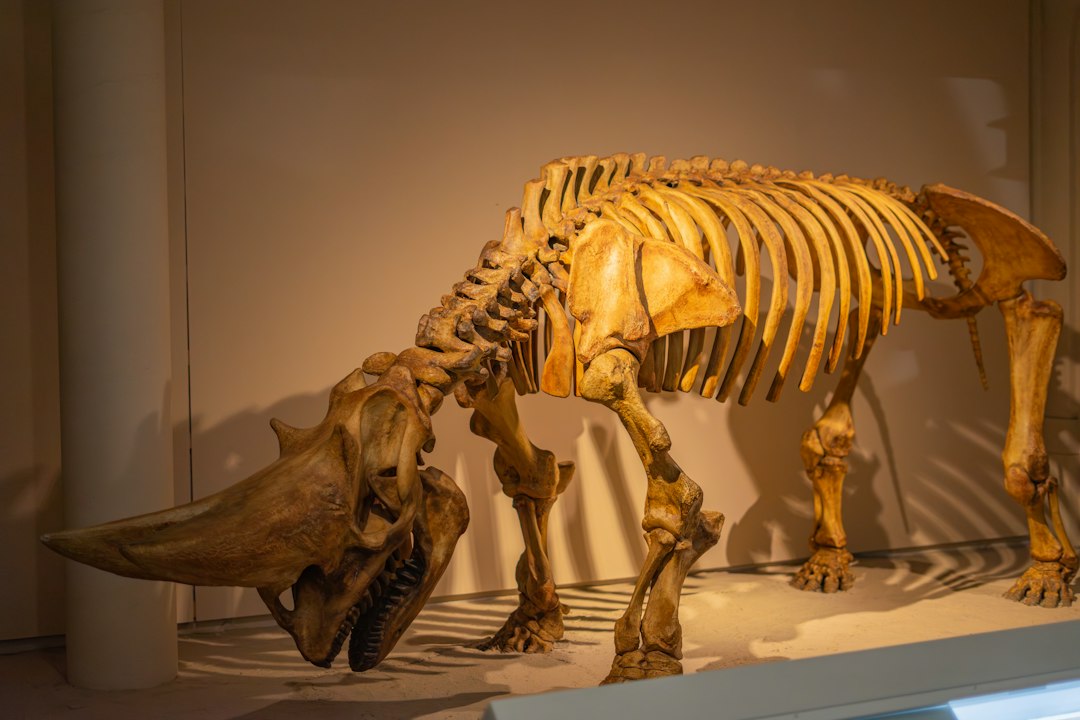
More than 16 million years ago, the region now covered by the Sahara was not a sea of sand. It was a living mosaic of riverine forests, open woodland, floodplains, and grassy clearings. Rivers wound through shaded vegetation, herbivores moved between feeding grounds, and an extraordinary variety of mammals occupied ecological roles that have long since disappeared.
Among the most imposing animals in that landscape was Megistotherium osteothlastes, a gigantic hyaenodont and one of the largest mammalian land predators known from Africa. It was not a dinosaur, a modern cat, or an ancestor of today’s hyenas. It belonged to a separate branch of mammalian evolution—one that became highly successful after the extinction of the non-avian dinosaurs and dominated predator niches for tens of millions of years.
A predator from a forgotten mammalian dynasty
Hyaenodonts emerged during the Paleocene, more than 60 million years ago, as mammals diversified into the ecological space left vacant by the disappearance of the great non-avian dinosaurs. They spread across parts of Europe, Asia, and Africa, evolving forms ranging from small hunters to massive apex predators.
Their resemblance to modern hyenas was mainly functional. Both groups developed strong, meat-processing teeth, but they were not close relatives. Hyaenodonts and the modern order Carnivora followed separate evolutionary paths and arrived at some similar solutions through convergent evolution.
Africa’s long geographic isolation created unusual opportunities for this lineage. For millions of years, the continent’s predators evolved with limited competition from Eurasian carnivorans. Large herbivores—including mastodon relatives, early rhinoceros-like animals, primitive horses and tapirs, and numerous extinct bovids—provided the biological foundation for an exceptionally powerful predator.
An enormous skull and formidable jaws
The most striking feature attributed to Megistotherium is its skull. Reconstructions based on fossil material suggest a length of roughly 66 centimeters—about the distance from an average adult’s elbow to fingertips. That would place it among the largest known skulls of any terrestrial mammalian carnivore.
The skull was not lightly built for speed. It was deep, heavily constructed, and shaped to withstand powerful forces. Enlarged areas for the attachment of the temporalis muscles, together with a prominent sagittal crest, indicate a jaw apparatus adapted for forceful closure. Its teeth included cutting and crushing surfaces capable of processing substantial amounts of flesh and perhaps reaching deep into carcasses.
Exact body mass remains uncertain because the known remains are fragmentary and the postcranial skeleton is poorly represented. Conservative estimates place the animal at around 400 kilograms or more, while older, much higher estimates are considered unreliable because they depend on broad extrapolations from teeth and skull fragments. The key point is not a single precise number, but the combination of great body size, an exceptionally large head, and an anatomy focused on powerful feeding.
How might Megistotherium have hunted?
The fossil record cannot provide a complete behavioral biography, so its hunting strategy remains debated. A predator weighing several hundred kilograms would have faced high energetic costs during a prolonged chase. That makes an ambush strategy plausible, especially in the wooded habitats and river corridors of Miocene Africa.
Megistotherium may have waited near water sources, game trails, or areas where vegetation restricted the movement of large herbivores. A sudden attack followed by a crushing bite could have ended a struggle quickly. Its massive head and strong neck would have been useful for holding and immobilizing prey without relying on sustained speed.
Scavenging was also likely part of its ecological repertoire. Large predators commonly combine active hunting with opportunistic use of carcasses, and an animal with such powerful jaws could have displaced smaller competitors from a kill. It may even have accessed nutrient-rich marrow, although direct evidence for specialized bone consumption is lacking.
Potential prey included large bovids, primitive perissodactyls, and young or vulnerable mastodon relatives. These possibilities are inferred from animals living in the same regions and from the predator’s estimated dimensions; the fossils do not reveal how often Megistotherium hunted each type or whether it routinely attacked the largest available prey.
The opening of Africa to new competitors
Megistotherium’s world began to change as Africa moved northward and the remaining barriers of the ancient Tethys region narrowed and closed. Between roughly 19 and 15 million years ago, increasingly stable land connections enabled animals to move between Africa and Eurasia.
The first incoming carnivorans were not modern lions and leopards. They included smaller, primitive forms such as early viverrids, mustelid-like mammals, and amphicyonids, sometimes called bear-dogs. These immigrants did not necessarily challenge Megistotherium directly. Instead, they occupied smaller and intermediate predator niches with different combinations of agility, sensory ability, locomotion, and hunting technique.
Evolutionary competition rarely resembles a single decisive confrontation. A newcomer can gradually replace an established animal by using a particular resource more efficiently. Over generations, this may reduce the older species’ access to prey, shelter, or breeding opportunities. As the middle levels of a food web are reorganized, pressure can eventually reach even the apex predator.
Climate change reshaped the hunting ground
The middle Miocene climatic optimum, approximately 17 to 15 million years ago, brought warm conditions and abundant vegetation across much of the region. Forests and wooded habitats supported a rich herbivore community, creating conditions favorable to very large predators.
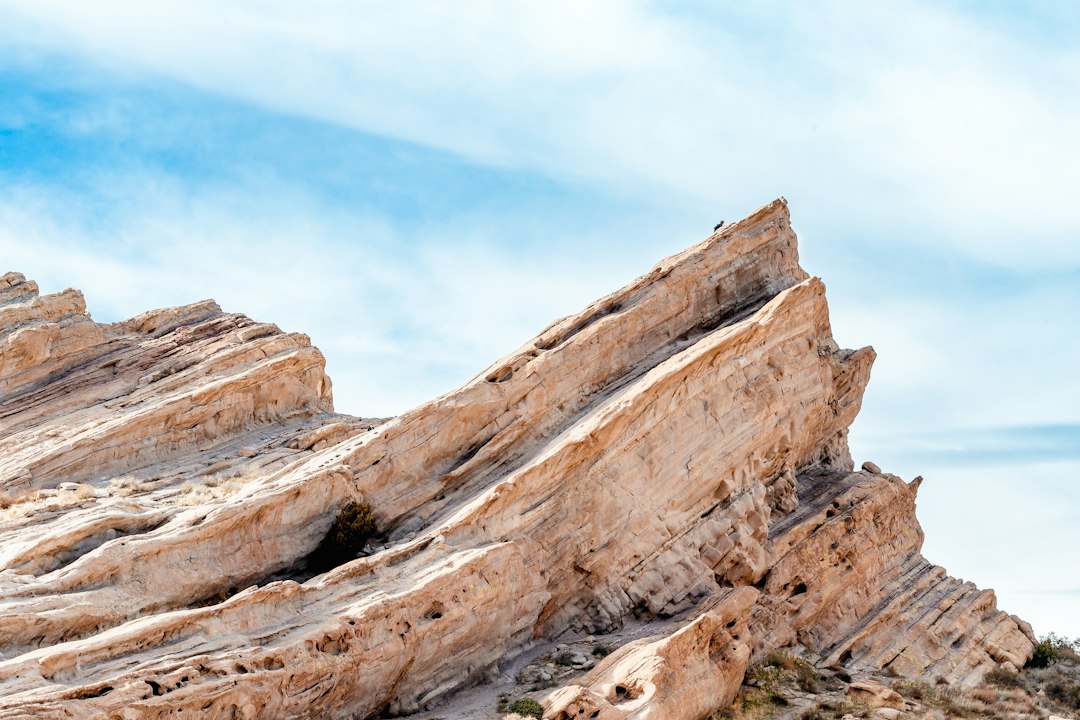
Beginning around 14 million years ago, global cooling contributed to the retreat of forests and the expansion of more open grassland and woodland-savanna mosaics. These changes did not eliminate all large prey, but they altered where prey lived and how predators could approach them.
A heavily built ambush predator could lose an important advantage as cover became less continuous. In open terrain, a hunter that depended on surprise would have fewer opportunities to approach unseen. Sustained pursuit would have demanded considerable energy, and the locomotor abilities of Megistotherium cannot be reconstructed confidently from the limited postcranial evidence.
At the same time, felids and other carnivorans were becoming increasingly established in Africa. Their different body plans and hunting methods may have suited the changing habitats more effectively. The result was likely a long period of ecological pressure rather than a sudden defeat.
An extinction without a single final blow
Megistotherium fossils are known from parts of Libya, Egypt, and Kenya, placing the genus broadly between about 19 and 12 million years ago, though individual species and sites have narrower ranges. Its record becomes sparse during the middle Miocene and then disappears. Because fossil preservation is incomplete, the absence of remains cannot identify the exact date when the last individual died.
There is no evidence of a final battle or a single catastrophic event. A more realistic explanation is a combination of pressures: competition reduced access to some resources, climate change modified the habitats that favored hyaenodonts, and shrinking prey or predator communities reduced the resilience of already specialized populations.
Other hyaenodonts survived after the disappearance of the largest African forms. Medium-sized lineages such as Dissopsalis persisted in parts of Asia into the later Miocene, while African branches vanished earlier. Their persistence shows that the extinction of Megistotherium was not the instantaneous end of the entire dynasty, but the loss of its most extreme expression.
What the fossils still have to teach us
Megistotherium’s story is also a lesson in how paleontology works. Important fossils can remain in museum collections for decades before new comparisons reveal their significance. Fragmentary jaws, teeth, ankle bones, and claw-bearing phalanges may appear unremarkable when isolated, yet become transformative when studied within a broader anatomical and geological framework.
The discovery and formal study of related giant hyaenodont material from Kenya demonstrated that African predators reached dimensions that had not been fully appreciated. It also showed why scientific conclusions must remain open to revision: new specimens can clarify a reconstruction, challenge an old estimate, or expose uncertainty that a single spectacular number conceals.
The full body of Megistotherium remains poorly known. Future finds in North and East Africa could improve estimates of its mass, posture, locomotion, and feeding behavior. They may also reveal that the diversity of Miocene hyaenodonts was greater than current collections suggest.
Today’s Sahara is a reminder that landscapes are temporary. Beneath its dry surface lies evidence of rivers, forests, grasslands, herbivore migrations, and predators unlike anything alive now. Megistotherium was perfectly suited to one version of Africa, but no lineage is guaranteed permanence. The same specialization that creates supremacy in a stable environment can become a vulnerability when climate, geography, and competitors change together.
For tens of millions of years, hyaenodonts solved the problems of predation in their own distinctive way. Their disappearance left ecological space that later carnivorans filled with new solutions. The giant predator did not lose a single contest; its world gradually ceased to reward the traits that made it dominant.
We aim to distinguish established evidence from interpretation, identify uncertainty where it matters, and revise articles when stronger evidence changes the picture. If you spot an error or have a better source, contact support@walkingmoda.com.