Inostrancevia: The Saber-Toothed Predator That Ruled Before Dinosaurs
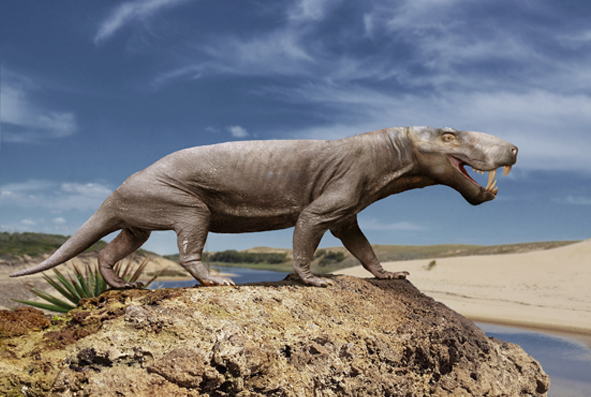
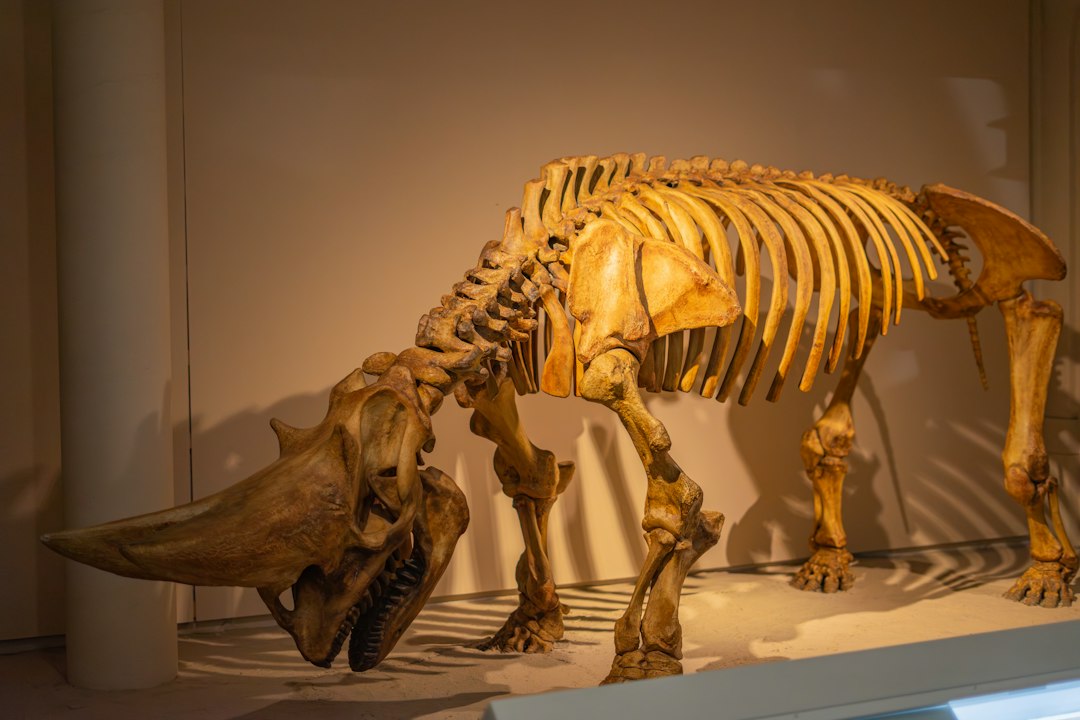
Long before the first dinosaurs appeared, Earth was ruled by a very different cast of predators. Among the most remarkable was Inostrancevia, a large gorgonopsid that stalked the landscapes of the late Permian. It was not a dinosaur, nor quite a mammal, but part of an evolutionary branch whose features foreshadowed the mammals that would eventually inherit the planet.
A predator from a harsher world
Inostrancevia lived more than 250 million years ago, during the Permian Period. The continents were gathered into the supercontinent Pangaea, producing vast, demanding environments that ranged from dry interiors to seasonal forests and river plains. Reptiles, amphibian-like animals, and early relatives of mammals competed in ecosystems very different from those of the later Mesozoic.
Gorgonopsids occupied the role of dominant land predators in many of these communities. Their bodies were generally low-slung and muscular, with skulls built for delivering powerful bites. Inostrancevia represented one of the most imposing members of the group. Fossils show an animal with a long, deep skull, robust limbs, and an array of enlarged canine teeth that gave gorgonopsids their familiar saber-toothed appearance.
The anatomy of a saber-toothed hunter
Its most conspicuous weapons were the long upper canines. These teeth were not simply oversized decorations. They were suited to puncturing and holding struggling prey, while the animal’s jaws and neck muscles helped it control a victim at close range. The rest of the skull was reinforced for the stresses of repeated biting, making Inostrancevia an efficient predator rather than a fragile specialist.
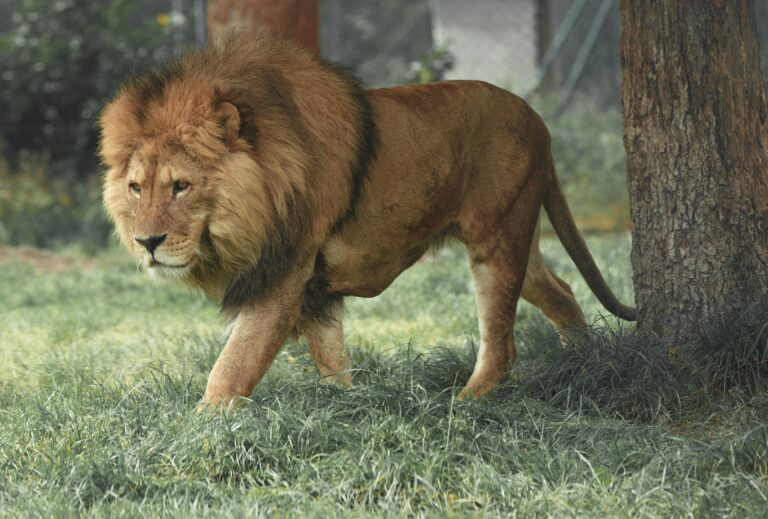
Although its silhouette may look vaguely feline, the comparison has limits. Inostrancevia did not walk or hunt exactly like a modern big cat. Gorgonopsids belonged to the broader therapsid lineage, and their posture likely combined sprawling and more upright elements in a way that reflects a transitional stage in terrestrial locomotion. Their bodies were adapted for power and pursuit, but they evolved along a separate path from true mammals.
How it may have hunted
Inostrancevia probably targeted substantial herbivores and other sizeable animals living in its range. A hunt may have depended on an ambush, a short burst of speed, or a close-quarters attack in which the predator used its jaws to inflict deep wounds. The saber-like canines would have been particularly useful against soft tissues, allowing a bite to cause severe bleeding before the predator backed away and followed the injured animal.
Its success also depended on the wider food web. Permian ecosystems supported a wide variety of herbivorous and omnivorous therapsids, along with reptiles and amphibians. Inostrancevia was one of the animals capable of turning that abundance into energy, helping define the balance between hunters and prey at the top of the ecosystem.
A clue to mammalian origins
Gorgonopsids are important not because they were direct ancestors of modern cats or wolves, but because they belonged to the therapsid radiation from which mammals eventually emerged. Their skulls, teeth, and limb arrangements illustrate how synapsids were experimenting with traits that would later become characteristic of mammalian life, including more specialized dentition and increasingly active forms of movement.
Inostrancevia therefore represents both a successful predator and an evolutionary dead end. Its lineage developed impressive adaptations, yet it did not survive into the mammal-dominated future. Evolution is not a ladder with every successful animal leading directly to a modern descendant. It is a branching history filled with experiments, expansions, and disappearances.
The end of the gorgonopsid reign
The Permian ended in the most severe mass extinction known in the fossil record. Rapid environmental change, intense volcanism, warming, ocean disruption, and the collapse of food webs transformed life on land and in the sea. Gorgonopsids, including the large forms represented by Inostrancevia, vanished during this crisis.
Their disappearance opened ecological space for new groups during the Triassic. Dinosaurs would later become famous occupants of those ecosystems, but they inherited a world already reshaped by the extinction. The fall of Inostrancevia was part of that larger transition: the close of an ancient predator dynasty and the beginning of a new evolutionary era.
Why Inostrancevia still matters
Inostrancevia reminds us that the age before dinosaurs was not a quiet prelude. It was a dynamic world of powerful predators, specialized prey, and evolutionary innovation. Its saber-like teeth and formidable skull reveal how far therapsids had already traveled toward active, efficient predation, while its extinction shows how quickly even dominant animals can be erased when planetary conditions change.
Studying this predator brings the Permian back into focus as a major chapter in the history of life. Before dinosaurs became symbols of prehistoric power, animals such as Inostrancevia occupied the top of the food chain—and for a time, they ruled it with extraordinary force.
We aim to distinguish established evidence from interpretation, identify uncertainty where it matters, and revise articles when stronger evidence changes the picture. If you spot an error or have a better source, contact support@walkingmoda.com.