Mosasaurus: Anatomy, Hunting Strategy, and the Rise of a Cretaceous Apex Predator
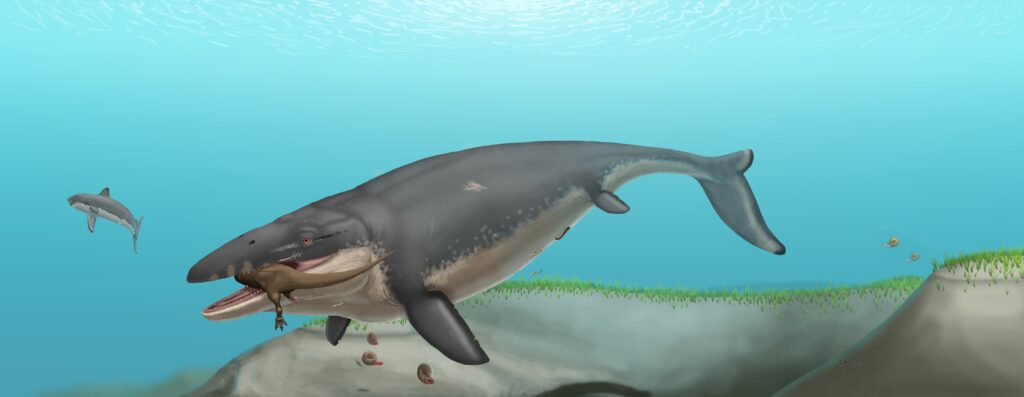
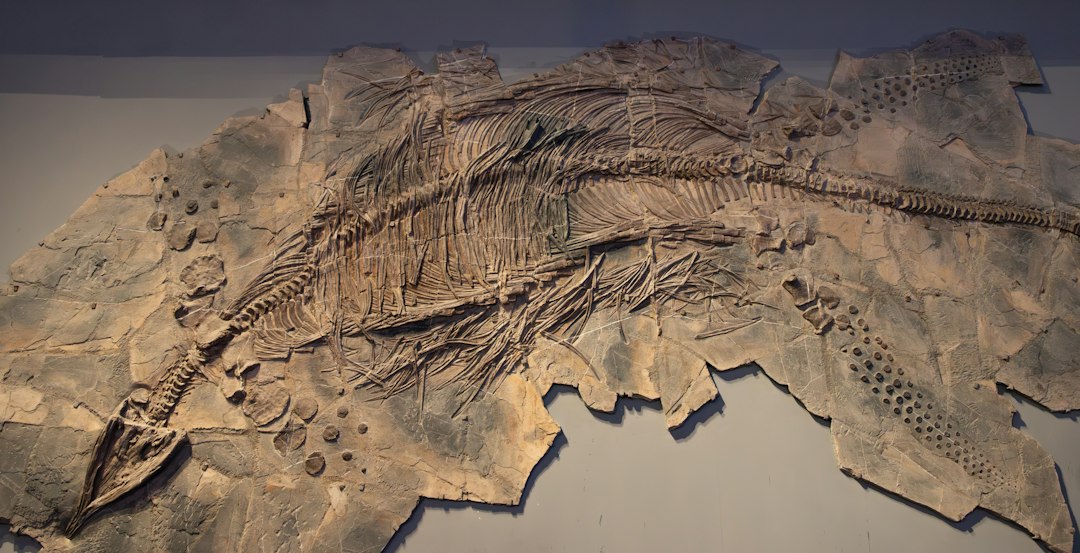
Picture the oceans of roughly 70 million years ago: warm water stretching across regions that are now dry land, broad inland seas dividing continents, and marine ecosystems unlike anything alive today. In those seas, one predator stood out for its size, speed, and specialized anatomy. Mosasaurus was not a dinosaur or a modern crocodilian, but a giant marine lizard that became one of the Late Cretaceous ocean’s dominant hunters.
A lizard transformed for the open ocean
Mosasaurs descended from terrestrial or near-shore lizards, yet their bodies changed dramatically as successive generations adapted to marine life. Their limbs became paddle-like flippers, their bodies lengthened, and a powerful tail evolved to drive them through the water. This combination produced an animal that retained the basic identity of a lizard while occupying the ecological role of a modern great white shark, orca, and crocodile in one formidable package.
The result was a streamlined predator capable of cruising through open water and accelerating when prey came within range. Mosasaurus was built for a life in which every movement, from steering to striking, had to work in three dimensions.
Size that changed the balance of the food web
The name Mosasaurus refers to a genus containing several species, and estimates vary depending on the fossil and method used. The largest individuals of the best-known forms may have reached around 15 to 17 meters in length, making them longer than many modern whales and far larger than the sharks and marine reptiles they shared the sea with.
Size alone did not make Mosasaurus successful. A large body required enormous amounts of energy, so the animal needed reliable access to substantial prey. Its scale instead worked together with its jaws, teeth, sensory abilities, and swimming equipment. It could threaten animals that smaller predators could not tackle and could dominate the best feeding grounds in the Cretaceous seas.
A mouth designed to hold on
The skull of Mosasaurus was massive and strongly built. Its long jaws carried conical, sharply pointed teeth that curved inward. This shape was useful for gripping slippery prey: once an animal was caught, the teeth made escape difficult.
Mosasaur jaws also had an unusual degree of flexibility. Like snakes, they possessed movable connections between parts of the lower jaw, allowing the mouth to expand around large food. This did not mean Mosasaurus swallowed every meal whole, but it did give the predator an impressive ability to seize, reposition, and consume prey that would have been difficult for a more rigid-jawed hunter.
Behind the main tooth row, many mosasaurs had additional teeth on the roof of the mouth. These helped secure food as it was moved toward the throat. The arrangement was especially effective against powerful, struggling prey, because the mouth functioned less like a simple trap and more like a series of gripping surfaces.
Hunting in a world of giant prey
Late Cretaceous seas supported a remarkable variety of animals, including fish, sharks, turtles, diving birds, cephalopods, and other marine reptiles. A fully grown Mosasaurus could have attacked prey of considerable size, including smaller mosasaurs and other large vertebrates. Fossil evidence from mosasaur relatives also shows that these predators sometimes consumed hard-shelled animals and scavenged when opportunity favored it.
A likely attack began with an approach powered by the tail. Mosasaurus could use its broad flippers for steering and stability while the tail supplied most of the thrust. At close range, it could lunge, seize its target, and rely on inward-curving teeth to maintain the grip. The skull and neck then absorbed the force of the struggle.
It would be a mistake to imagine a single hunting style for every situation. A giant predator may have ambushed slower animals, pursued smaller prey, scavenged carcasses, or taken advantage of seasonal concentrations. Its advantage came from versatility. Mosasaurus was large enough to intimidate competitors but anatomically flexible enough to exploit different food sources.
Senses suited to dark water
The ocean was not an empty blue expanse. Much of a large predator’s world would have been defined by low light, suspended particles, and sound and pressure traveling through water. Mosasaurus had large eyes, which may have helped it detect movement and contrast in dim conditions. As with modern aquatic predators, vision would have worked alongside other sensory systems that detected disturbances and nearby movement.
This mattered because an animal of Mosasaurus’s size could not afford to waste energy searching randomly. Locating prey, judging its direction, and closing the distance efficiently were central to survival. The predator’s success depended not just on its jaws, but on the sensory information that brought those jaws into position.
Competition among marine giants
Mosasaurus lived during an evolutionary arms race. Sharks were diversifying, turtles occupied several marine niches, and other mosasaurs filled roles ranging from small coastal hunters to massive open-water predators. The seas also contained plesiosaurs and enormous fish, creating a crowded and competitive food web.
In that environment, Mosasaurus represented the upper end of predatory specialization. Its body plan combined a powerful propulsive tail, maneuverable flippers, a reinforced skull, flexible jaws, and teeth adapted to gripping. Each feature addressed a different challenge of marine hunting, and together they made the animal a highly effective apex predator.
How fossils reveal a living animal
The first recognized Mosasaurus fossils helped establish how dramatically life had changed through geological time. Fossils of jaws, teeth, vertebrae, and other bones allow researchers to reconstruct the animal’s size and anatomy, while damage and wear on the teeth offer clues about feeding behavior. Comparisons with living lizards, snakes, crocodilians, and other marine vertebrates help scientists test how the animal may have moved and hunted.
Fossils also show that the familiar image of a single, uniform “sea monster” is misleading. Mosasaurs varied in form and occupied different habitats. Some were relatively small and specialized; others became enormous. Even within a genus, body proportions and feeding adaptations could differ. The broader mosasaur family was an evolutionary radiation, not one unchanging design.
The end of a successful dynasty
Mosasaurs disappeared at the end of the Cretaceous, about 66 million years ago, during the mass extinction that eliminated non-avian dinosaurs and many marine groups. The event disrupted food webs on a global scale. Changes in climate, ocean chemistry, productivity, and habitat would have affected large predators especially severely because they depended on a steady supply of energy from lower levels of the ecosystem.
The extinction did not prove that Mosasaurus was poorly adapted. It shows that even a dominant predator remains dependent on the stability of its environment. A body built for ruling a warm, productive Cretaceous sea could become a liability when that world changed abruptly.
Why Mosasaurus still matters
Mosasaurus captures the imagination because it looks like a creature assembled from familiar parts and pushed beyond modern limits: a lizard with the body of a marine missile, the jaws of a giant reptile, and the ecological power of an ocean apex predator. Yet its real importance goes beyond appearance.
Its fossils document how evolution can repeatedly reshape a land-based lineage for life in the sea. They also reveal how quickly marine ecosystems can produce enormous predators when climate, geography, and prey availability create the opportunity. Mosasaurus was not a creature from legend. It was a highly adapted animal that turned the Late Cretaceous ocean into its territory—and its story is preserved in the rocks left behind when that world disappeared.
We aim to distinguish established evidence from interpretation, identify uncertainty where it matters, and revise articles when stronger evidence changes the picture. If you spot an error or have a better source, contact support@walkingmoda.com.