Hatzegopteryx: Anatomy of a Giant Cretaceous Pterosaur
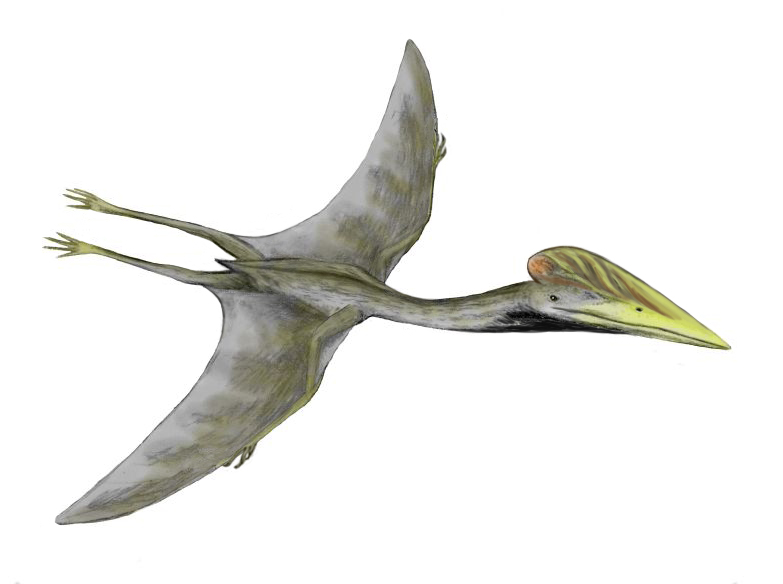
Long before the first birds filled the skies, enormous pterosaurs ruled the air above the islands of Late Cretaceous Europe. Among the most remarkable was Hatzegopteryx thambema, a giant azhdarchid discovered in the Hațeg Basin of present-day Romania. Its name means “Hațeg wing” and “terror,” a fitting description for an animal whose proportions and construction made it one of the most formidable fliers of its age.
A giant from an island world
During the Late Cretaceous, roughly 70 million years ago, the region that is now Transylvania was part of an archipelago in the ancient Tethys Sea. The Hațeg Basin was one of these island environments. Although island ecosystems often produce unusually small animals, large flying reptiles could travel between islands and exploit resources unavailable to many land-bound predators.
Hatzegopteryx shared its world with dwarf dinosaurs, crocodile relatives, turtles, and other pterosaurs. In this setting, a huge animal did not need to dominate a continent to be ecologically important. Its ability to patrol broad stretches of coastline, floodplain, and open woodland may have made it a high-level predator across the island landscape.
The skull that made it distinctive
The best-known feature of Hatzegopteryx is its enormous skull. Fossil fragments indicate a short, very broad head with a powerful, deep jaw region. The skull was not simply large; it was unusually robust compared with the long, slender skulls of many other azhdarchids.
That strength would have allowed the jaws to handle struggling prey and resistant tissues. The animal’s feeding style remains debated, but possible targets include small dinosaurs, reptiles, fish, and carrion. Its broad skull may also have supported a more forceful bite than the delicate-looking heads of some related pterosaurs.
Lightweight bones, reinforced where it mattered
Like other pterosaurs, Hatzegopteryx had hollow bones that reduced weight without sacrificing all structural strength. Its wing bones were built around internal supports, creating a lightweight framework for powered flight. At the same time, the preserved skull and neck elements appear unusually thick and sturdy.
This combination is central to understanding the animal. Hatzegopteryx was not a flying dinosaur with solid, heavy bones. It was a highly specialized pterosaur that balanced low mass with reinforcement in the parts most exposed to stress. Its anatomy shows that giant flight can evolve through careful structural design rather than brute size alone.
How large was it?
Exact size estimates have changed as new comparisons and interpretations have emerged. The fossil record is incomplete, so scientists must reconstruct total wingspan from isolated bones and comparisons with better-known azhdarchids. Estimates commonly place Hatzegopteryx among the largest pterosaurs, with a wingspan often proposed in the range of 10 to 12 meters.
Those numbers should be treated as estimates rather than a single settled measurement. Even the lower end represents an animal far larger than any living flying bird. Its height while standing on all fours may have approached that of a giraffe, giving it an extraordinary presence on the ground as well as in the air.
A hunter on two modes of movement
Pterosaurs were capable of walking on all four limbs, using their folded wings as forelimbs. Azhdarchids in particular are often reconstructed as effective terrestrial stalkers. Hatzegopteryx may have walked across open ground while scanning for prey, then launched into flight when it needed to cover distance or pursue an opportunity.
Its long neck and elevated head would have provided a broad view over vegetation and shallow wetlands. Whether it seized live prey, scavenged, or used a flexible mixture of strategies is still uncertain. The safest conclusion is that its anatomy supported an opportunistic lifestyle rather than a single narrowly defined feeding behavior.
What the fossils can—and cannot—tell us
Only fragments of Hatzegopteryx are known, and that limits confidence about details such as its exact wingspan, coloration, flight performance, and preferred prey. Paleontologists therefore compare its bones with other azhdarchids and test different reconstructions against biomechanics and the geology of the Hațeg Basin.
This uncertainty does not make the animal less impressive. It shows how much information can be recovered from partial fossils. The thickness of a bone, the shape of a joint, and the texture of a skull can reveal how an extinct animal moved and fed, even when the skeleton is far from complete.
Why Hatzegopteryx matters
Hatzegopteryx is more than a symbol of prehistoric Transylvania. It is evidence that giant pterosaurs occupied complex roles in island ecosystems and that flight could persist at extraordinary body sizes. Its heavy-looking skull, reinforced skeleton, and ground-oriented proportions challenge the idea that all pterosaurs were fragile fishers restricted to the shoreline.
Every new discovery from the Hațeg Basin has the potential to refine the picture. For now, Hatzegopteryx stands as one of the clearest reminders that the Cretaceous sky contained animals unlike anything alive today: enormous, efficient, and built for both soaring above the landscape and walking through it.
We aim to distinguish established evidence from interpretation, identify uncertainty where it matters, and revise articles when stronger evidence changes the picture. If you spot an error or have a better source, contact support@walkingmoda.com.