Jurassic Life: Giants, Oceans, and the Dawn of Birds
The Jurassic lasted roughly 56 million years, beginning after a major extinction at the end of the Triassic and ending about 145 million years ago. It was an age of ecological recovery, experimentation, and extraordinary size. Dinosaurs moved from the margins of terrestrial ecosystems into dominant roles, while marine reptiles ruled warm shallow seas and the first birds shared the sky with pterosaurs.
A planet reshaped
At the beginning of the Jurassic, Pangaea still joined most of the world’s landmasses. The interior was dry and seasonal, while river valleys, coastal plains, and shallow seas supported richer communities. The preceding extinction was strongly associated with eruptions of the Central Atlantic Magmatic Province. Carbon dioxide and sulfur dioxide drove warming, acid rain, ocean acidification, and oxygen-poor marine waters. Many phytosaurs, aetosaurs, and large herbivorous archosaurs disappeared, leaving open ecological niches.
Dinosaurs, pterosaurs, early crocodylomorphs, and small mammal relatives survived. An efficient respiratory system involving air sacs may have helped dinosaurs cope with difficult conditions, although the details remain an active area of research. Their success also depended on movement, behavior, and the ability to exploit newly available habitats.
Giants on land
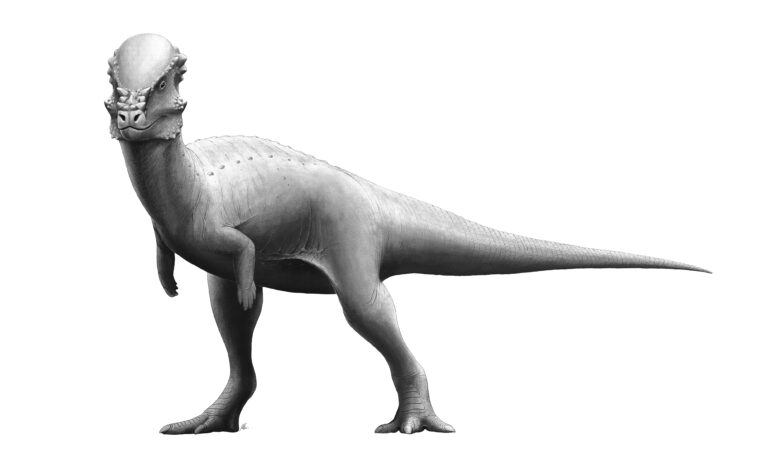
Jurassic dinosaurs belonged mainly to two great branches. Saurischians included theropods, the mostly bipedal predators that eventually produced birds, and sauropodomorphs, the long-necked herbivores. Ornithischians included early ornithopods and armored groups that later produced stegosaurs.
The sauropods became the largest land animals in Earth’s history. Long necks let them harvest vegetation across wide areas without moving their massive bodies, while air-sac systems may have made their skeletons lighter and their breathing more efficient. Brachiosaurus browsed high in the canopy. Diplodocus fed closer to the ground with a long horizontal neck and an extraordinarily long tail. Apatosaurus was another immense herbivore of the Late Jurassic.
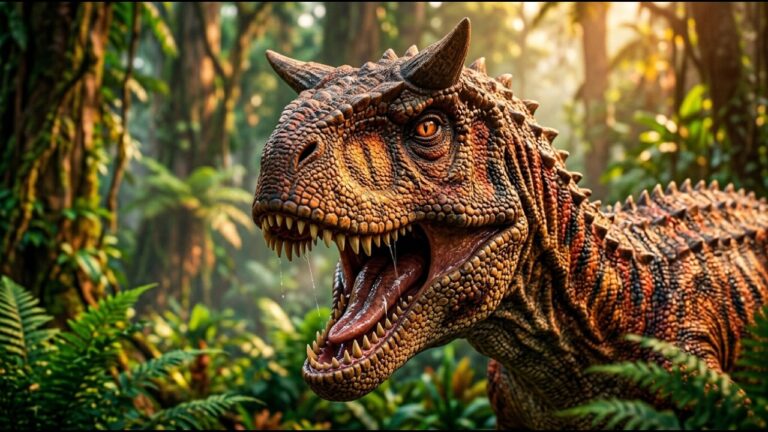
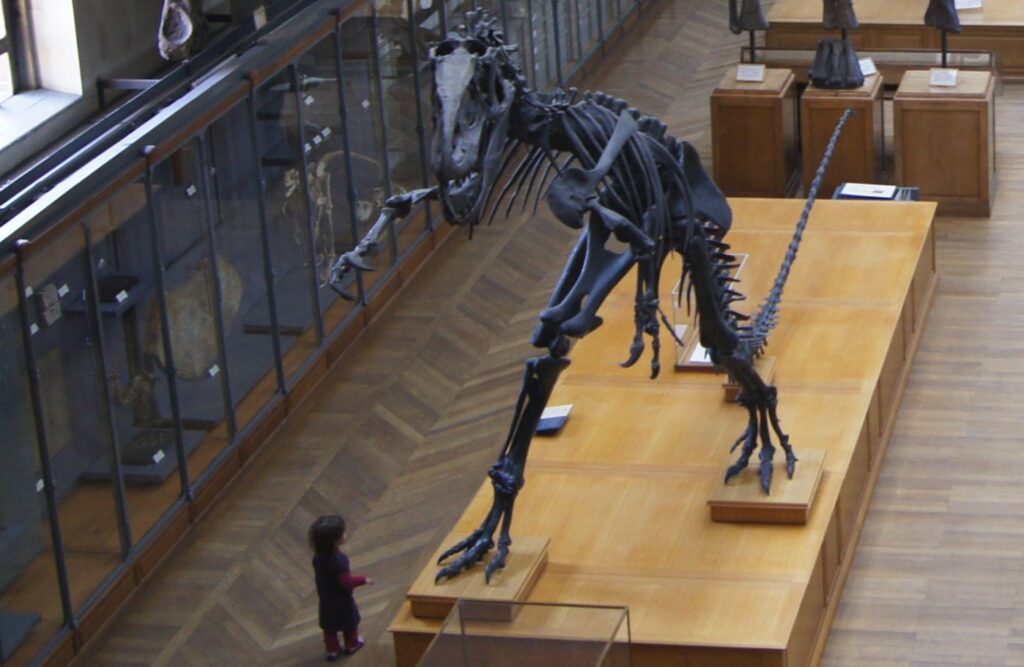
Large predators followed these plant-eating giants. Allosaurus had serrated, replaceable teeth, clawed forelimbs, and a skull and neck adapted to powerful attacks. Its exact hunting behavior remains uncertain; it may have hunted, scavenged, or used different strategies depending on the opportunity. Stegosaurus, meanwhile, defended itself with a spiked tail, while its back plates may have served in display, heat exchange, or both.
Conifers, cycads, ginkgos, ferns, and other seed plants formed the vegetation of many Jurassic landscapes. Rocks of the Morrison Formation preserve seasonal floodplains, lakes, and river channels. Wet seasons brought floods and abundant plant growth; dry seasons reduced rivers and concentrated animals around remaining water. Large herbivores may have migrated as conditions changed.
Oceans of reptiles
Warm shallow seas covered broad continental shelves. Ammonites and belemnites were abundant, and fish supported several groups of marine reptiles. Ichthyosaurs evolved streamlined bodies that resembled those of dolphins, with large eyes suited to hunting in dim water. Some fossils preserve body outlines, stomach contents, and evidence of live birth.
Plesiosaurs moved with four broad flippers. Long-necked species may have approached fish with the head separated from the movement of the body, while short-necked pliosaurs had enormous skulls and powerful jaws. The largest Jurassic marine predators were formidable, although popular size estimates for some genera are often higher than the fossils justify.
Wings, feathers, and the night shift
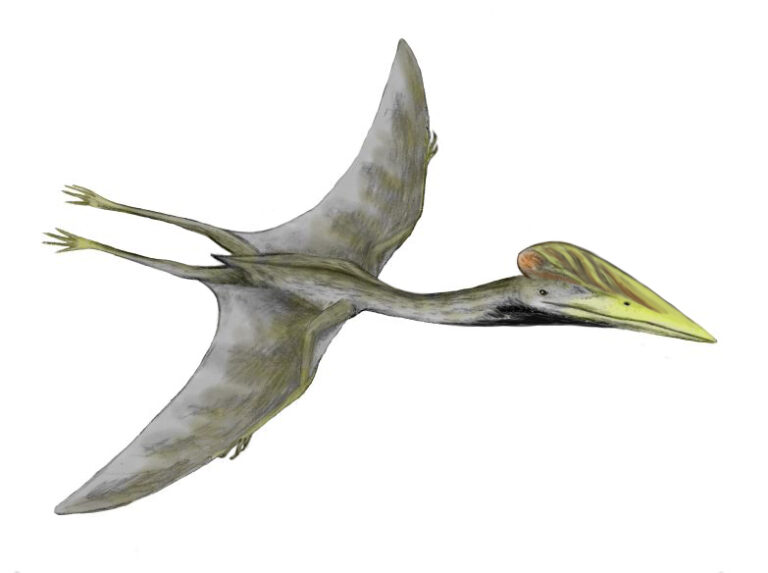
Pterosaurs had conquered active flight before the Jurassic. Their wings were membranes stretched to an elongated fourth finger, entirely different from the feathered wings of birds. Some had long tails and fish-catching teeth; others had lightweight skulls and large crests. Hair-like pycnofibers suggest that at least some pterosaurs maintained active metabolisms.
Birds evolved from feathered theropods. Archaeopteryx combined feathers with teeth, clawed fingers, and a long bony tail. Feathers probably first evolved for insulation or display before being adapted for flight. Whether flight began primarily through gliding, running, or a combination of behaviors remains debated.
Small mammals occupied less conspicuous niches. Many were likely nocturnal, but they were not all tiny insectivores. Castorocauda was a semiaquatic Jurassic mammal with a broad tail and swimming adaptations. Mammalian jaw structure, differentiated teeth, fur, hearing, and metabolism were already laying foundations for later expansion. Life in the darkness may have favored sensory and cognitive abilities that became crucial after later extinctions changed the balance of life.
A legacy written in stone
The Morrison Formation in North America, Solnhofen in Germany, and Tendaguru in Tanzania preserve extraordinary records of Jurassic ecosystems. Their fossils include skeletons, footprints, teeth, feathers, fish, invertebrates, plants, and traces of ancient environments.
The Jurassic shows that dominance is temporary. Catastrophe can clear established communities, apparently marginal animals can carry the future, and great size can be both an advantage and a vulnerability. The period is remembered for its giants, but its deeper legacy also belongs to small adaptable creatures moving through the shadows. Their descendants would eventually inherit a world the giants could not keep forever.
We aim to distinguish established evidence from interpretation, identify uncertainty where it matters, and revise articles when stronger evidence changes the picture. If you spot an error or have a better source, contact support@walkingmoda.com.