Pulmonoscorpius: The 70-Centimetre Scorpion of Scotland’s Carboniferous Forests
About 340 million years ago, long before dinosaurs, flowers, or familiar modern forests, a remarkable predator moved across the floor of what is now Scotland. Pulmonoscorpius kirktonensis was a scorpion unlike any living today: the largest known fragments suggest an animal approximately 70 centimetres long, several times the size of the modern emperor scorpion.
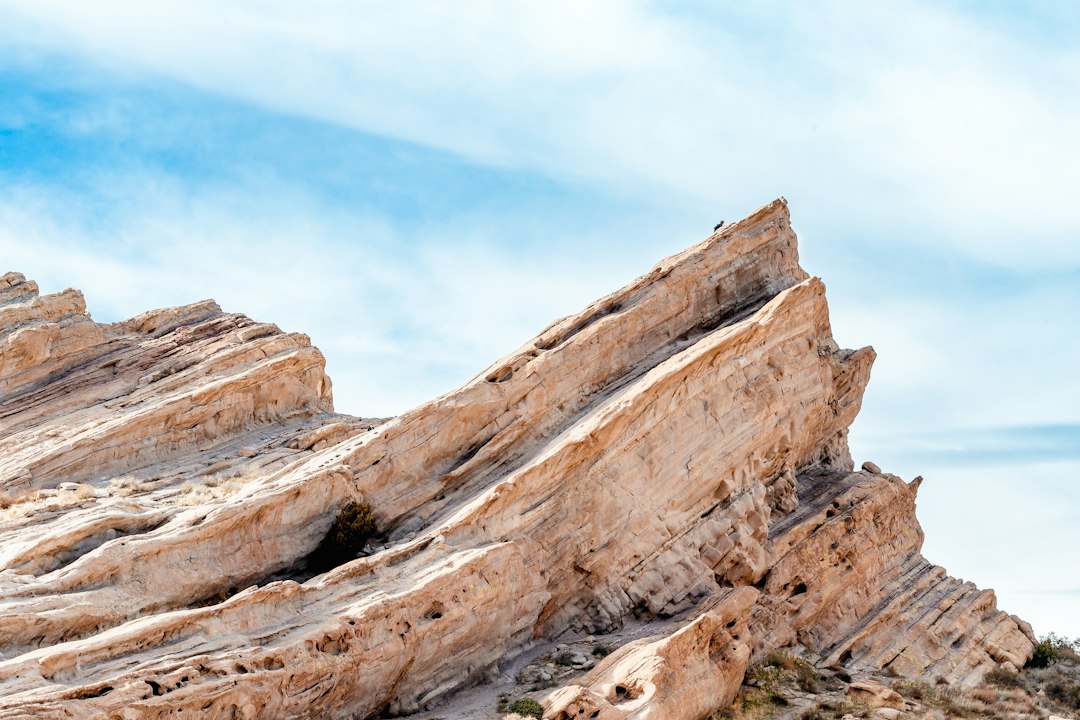
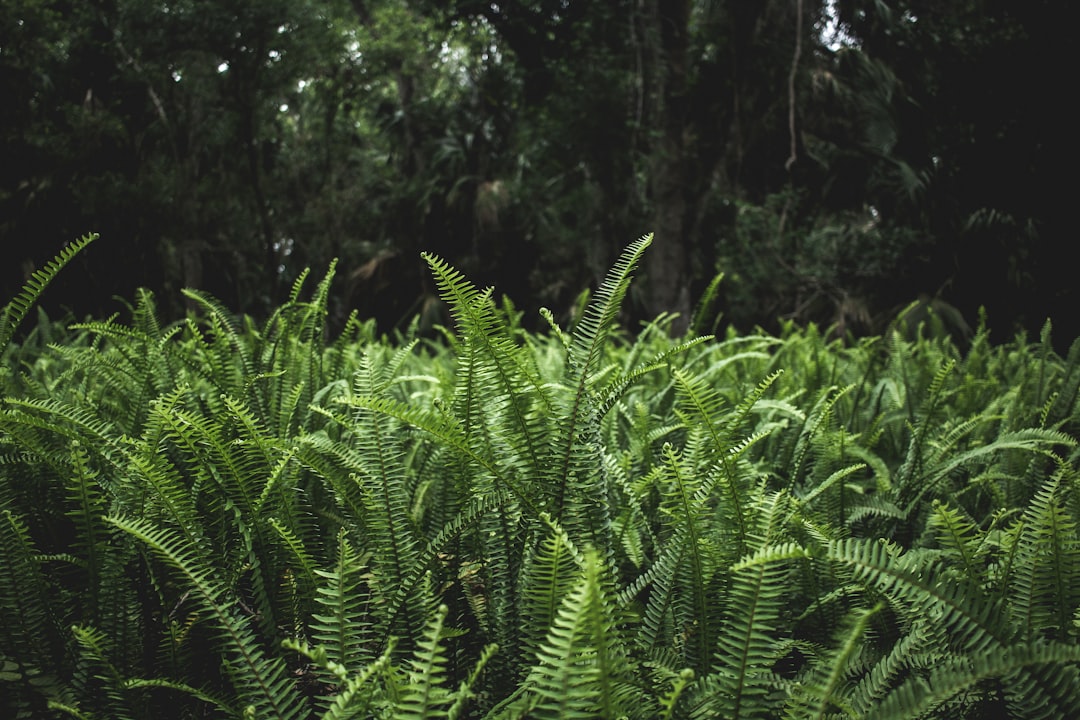
Its reign was made possible by an unusual combination of climate, vegetation, geology, and atmospheric chemistry. The landscape was not a modern Scottish woodland but an open, volcanic forest surrounding mineral-rich lakes and hot springs. Ferns, early seed plants, giant horsetail relatives, and tree-sized lycophytes formed a landscape with no true modern equivalent.
A forest unlike any modern ecosystem
During the early Carboniferous, Scotland lay much closer to the Equator than it does today. The climate was warm and seasonal, with wetter pockets around lakes and streams and more exposed, semi-arid ground between them. Decaying plant matter accumulated across the forest floor, creating a deep layer of leaf litter where arthropods and small vertebrates could move unseen.
Some Carboniferous forests were dominated by towering lycophytes such as Lepidodendron and Sigillaria, which could rise more than 30 metres. East Kirkton, however, appears to have supported a more open community shaped by volcanic activity and irregular rainfall. Hydrothermal waters and mineral-rich sediments also helped preserve delicate fossil remains, giving researchers an unusually detailed glimpse into this vanished ecosystem.
How the giant scorpion was discovered
The story of Pulmonoscorpius begins in a quarry near Bathgate, in central Scotland. Fossil collector Stan Wood recognized the importance of the East Kirkton outcrops and spent years recovering material from their volcanic limestone. The site yielded early tetrapods, plants, myriapods, and arachnids, including articulated pieces of an exceptionally large scorpion.
Paleontologist Andrew Jeram formally described the species in 1994. Its name combines pulmono, referring to lungs, with scorpius, or scorpion. The name reflects the animal’s book lungs—internal, layered respiratory organs that allowed it to function fully on land. The species name kirktonensis honors East Kirkton, the locality that revealed it.
The anatomy of a Carboniferous predator
Like modern scorpions, Pulmonoscorpius had a segmented chitinous exoskeleton. Its body was divided into a front section bearing the eyes, mouthparts, pincers, and eight walking legs, and an abdomen that narrowed into the flexible tail, or metasoma.
The exoskeleton provided protection while limiting water loss. Flexible membranes between hardened plates allowed the animal to move across uneven ground and damp leaf litter. Its exact colour cannot be recovered from fossils, but a dark, subdued body would have offered effective camouflage among decomposing vegetation and volcanic soil.
Small chelicerae near the mouth would have processed food after capture. Behind them, powerful pedipalps ended in grasping pincers. These were the first tools of an attack: they could seize and hold prey while the raised tail delivered the sting. The four pairs of legs were suited to stable movement and sudden positioning rather than extended pursuit.
The tail ended in a telson containing venom glands and a hollow stinger. The fossil record cannot reveal the precise chemistry of the venom, but comparison with living scorpions suggests that it was primarily an immobilizing tool. Venom production is metabolically expensive, so scorpions generally use it to subdue manageable prey quickly and reduce the danger of a struggle.
A hunter built for ambush
The most efficient predator is not necessarily the fastest. In many ecosystems, the successful strategy is to spend as little energy as possible while making escape unlikely. Pulmonoscorpius was probably an ambush hunter, using the forest floor as camouflage and waiting for prey to enter range.
Modern scorpions detect vibrations through sensitive structures on their legs, and their pectines—comb-like organs on the underside of the body—provide mechanical and chemical information about the substrate. The giant Carboniferous scorpion likely used comparable senses. A primitive tetrapod moving between roots or a smaller arthropod disturbing the leaf litter could reveal its presence without ever seeing the predator.
Once the target was close enough, the attack could happen almost instantly. The pincers clamped down, the tail arched over the body, and the stinger delivered venom. The prey could then be held and digested externally, a feeding method characteristic of scorpions and many other arachnids.
Potential prey included insects, smaller myriapods, and early terrestrial vertebrates. Large millipedes were also present, although their size and protective exoskeleton may have made them less economical targets. The evidence cannot prove every hunting encounter, but the animal’s anatomy and the ecosystem together point to a formidable floor-level predator.
Why arthropods became giants
Carboniferous arthropod gigantism has often been associated with elevated atmospheric oxygen. Some models suggest that oxygen levels reached considerably higher values than today during parts of the period, although estimates for the exact interval in which Pulmonoscorpius lived remain uncertain and debated.
Scorpions breathe through book lungs. Oxygen enters through openings in the exoskeleton and diffuses across thin layers into the haemolymph, which carries it to the tissues. Higher oxygen concentration could have increased the diffusion gradient and helped support larger bodies. This explanation is plausible, but it is not the only factor.
The absence of birds, bats, and other flying vertebrate predators may have reduced pressure against large insects. Atmospheric density, abundant food, warm conditions, and the structure of the forests may also have contributed. The size of Carboniferous arthropods was probably the result of several reinforcing ecological advantages rather than one simple cause.
The same world supported Arthropleura, a millipede-like animal that could reach about 2.5 metres, as well as large flying insects and aquatic arthropods. Pulmonoscorpius belonged to a community in which extraordinary size was not an isolated curiosity but part of a broader ecological pattern.
From the sea to the forest floor
Scorpions have an ancient history. The earliest widely accepted scorpion fossils date to the Silurian, around 430 million years ago, when much of complex life remained in aquatic environments. Early members of the lineage were probably marine or coastal animals, although the details of their respiratory biology and habitat remain subjects of research.
Over millions of years, scorpion ancestors developed tougher, more water-resistant cuticles and respiratory structures suited to air. The transition to land was gradual. As plants established themselves along shorelines, decomposers and small arthropods followed, creating new food sources. Predators able to remain out of water for longer gained access to these resources, and natural selection strengthened those terrestrial adaptations.
Book lungs represent part of that transformation. Structures descended from aquatic respiratory systems became internalized and organized for exchanging gases with air while limiting evaporation. In this sense, the name Pulmonoscorpius captures a major evolutionary achievement: a scorpion lineage that had become fully independent of the sea.
The ecosystem changed—and the giant disappeared
The great Carboniferous forests did not last forever. Around 305 million years ago, tropical environments became progressively cooler and drier as Pangaea assembled. Tectonic shifts, glacial advances, changing carbon cycles, and declining rainfall all contributed to the collapse and fragmentation of the humid forests.
The forests themselves may have influenced this transition. Vast quantities of plant matter were buried in waterlogged, oxygen-poor environments before decomposing. The carbon eventually became coal, removing carbon dioxide from the atmosphere and weakening the greenhouse effect. As forests contracted, oxygen production declined and the environmental conditions that favoured giant arthropods began to disappear.
The fossil record of Pulmonoscorpius is limited to the Viséan portion of the early Carboniferous. Its exact extinction mechanism is unknown, but habitat loss, changing oxygen levels, a cooler and drier climate, and increasing competition from terrestrial vertebrates may all have played roles. A body perfectly suited to one world can become a liability when that world changes.
A small survivor of a giant legacy
Scorpions themselves survived. Their descendants still use the same essential design: grasping pedipalps, eight walking legs, book lungs, a segmented tail, and a venomous stinger. Modern species are far smaller than Pulmonoscorpius, but their persistence is an evolutionary success of a different kind.
The giant scorpion’s story is not simply about a monster from the distant past. It shows how biology, atmosphere, climate, geology, and food webs can combine to create an animal that seems impossible by modern standards. It also illustrates a recurring rule of evolution: specialization can produce extraordinary power within a particular niche, while making a species vulnerable when its environmental foundation disappears.
For a brief interval in Earth’s history, the forest floor of Scotland belonged to a scorpion large enough to dominate its terrestrial surroundings. The rocks of East Kirkton preserve the evidence of that lost world, where volcanic lakes, extinct trees, early tetrapods, and giant arthropods shared an ecosystem that has no living counterpart.
We aim to distinguish established evidence from interpretation, identify uncertainty where it matters, and revise articles when stronger evidence changes the picture. If you spot an error or have a better source, contact support@walkingmoda.com.