The Ancient DNA of Denisovans and the Human Story They Left Behind
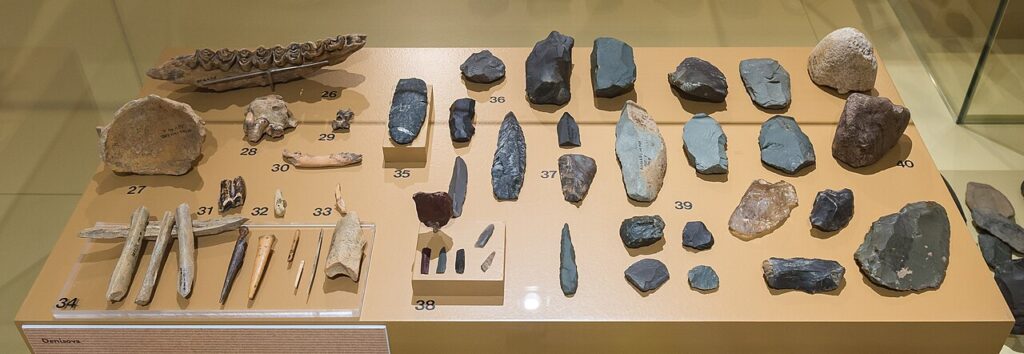
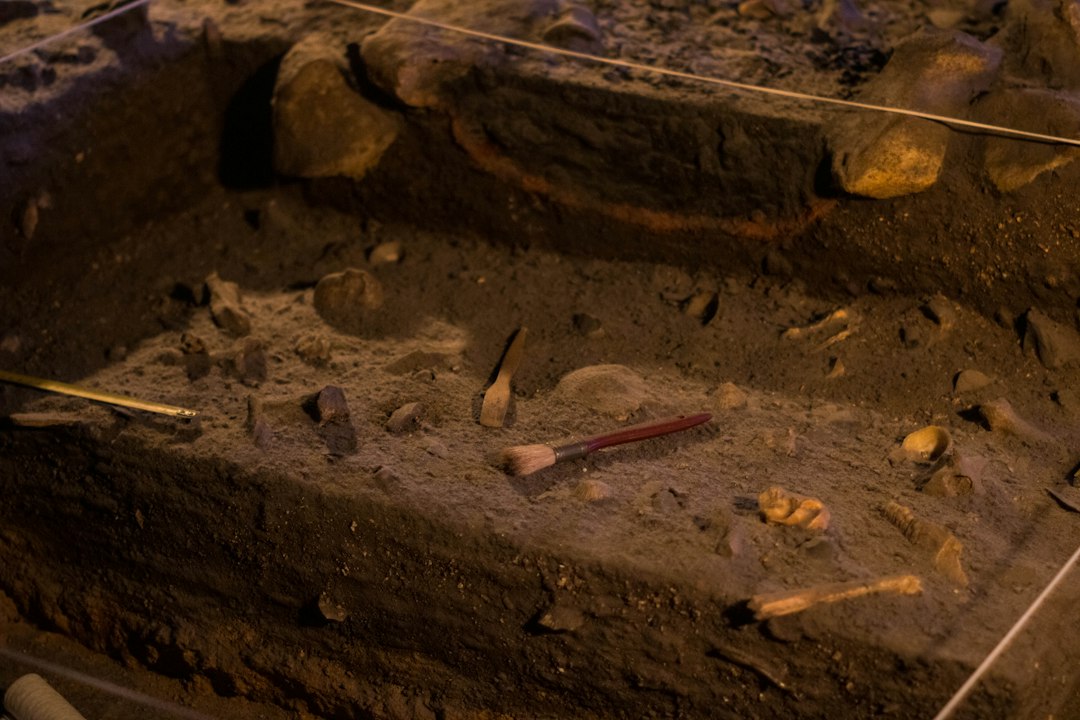
In 2010, a fragment of bone no longer than a small fingernail changed the history of human evolution. It came from Denisova Cave in the Altai Mountains of Siberia and belonged to a teenage girl who lived tens of thousands of years ago. The fragment looked ordinary. Its DNA was not.
Genetic analysis showed that the girl did not belong to modern Homo sapiens or to the Neanderthals. She represented a previously unknown human lineage: the Denisovans. They left behind almost no recognizable cultural record and only a handful of fossil remains, yet their biological legacy survives in the genomes of living people.
A species discovered through DNA
The discovery was made possible by the exceptional preservation of ancient material in Denisova Cave and by advances in ancient-DNA research. Researchers first studied mitochondrial DNA, which is abundant in cells and inherited through the maternal line. Later, nuclear DNA provided a more complete picture of the Denisovan genome and its relationship to other human groups.
The results placed Denisovans close to Neanderthals on the human family tree, while confirming that they were a distinct lineage. Their ancestors had separated from the lineage leading to Neanderthals and modern humans hundreds of thousands of years ago. The exact dates vary according to the genetic method used, but the central conclusion is clear: Denisovans were not simply an isolated Neanderthal population or an unusual group of Homo sapiens.
This discovery also changed how a human species could be identified. A complete skull or skeleton was not required. A small bone, preserved under the right conditions, contained enough information to reveal an entire branch of humanity that had been invisible to conventional archaeology.
Denisova Cave: a meeting place in deep time
Denisova Cave was occupied intermittently for roughly 300,000 years. Its protected galleries preserve layers containing traces of different human populations, including Denisovans, Neanderthals, and later modern humans. Sediment analysis has extended the evidence beyond identifiable bones: environmental DNA recovered from the cave floor can show which human groups once used particular layers.
The cave therefore offers a rare glimpse of a changing human landscape. Different lineages occupied the same shelter at different times, sometimes separated by many generations and perhaps sometimes by much less. The evidence does not describe a world of perfectly sealed species. It points instead to populations that moved, encountered one another, exchanged genes, and then separated again.
What did Denisovans look like?
The physical record remains frustratingly small. The original finger bone reveals little about the girl’s appearance. Several large molars found at the site are more informative: their robust proportions suggest broad jaws and a powerful chewing apparatus. A partial mandible discovered on the Tibetan Plateau and later identified as Denisovan through ancient proteins provides additional evidence of a strong, archaic-looking jaw without the projecting chin typical of modern humans.
Genetic and biochemical methods are filling in some of the gaps. DNA methylation patterns have been used to make cautious predictions about traits such as pigmentation and body form, while protein analysis can identify human remains in places where DNA has not survived. These reconstructions remain probabilistic, not photographic. We know far more about Denisovan ancestry and relationships than we do about the faces of the people who carried it.
The people who lived on the roof of the world
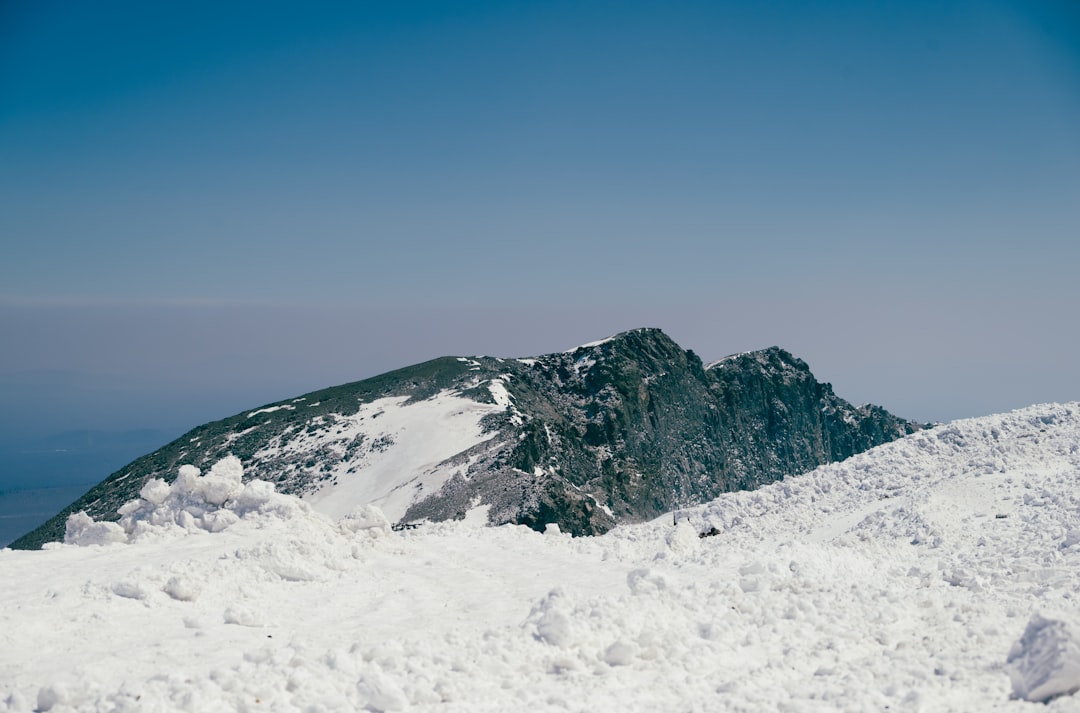
One of the strongest clues to Denisovan biology comes from the Tibetan Plateau. Many Tibetans carry a distinctive version of the EPAS1 gene, which helps the body respond to low-oxygen conditions at high altitude. The variant is rare in most other populations but closely resembles a version found in the Denisovan genome.
The most likely explanation is ancient introgression: ancestors of modern Tibetans encountered Denisovans, and some of their descendants inherited a variant that helped regulate life in thin mountain air. Natural selection then favored the variant as high-altitude populations became established. A Denisovan contribution may therefore have helped modern humans adapt to one of the most demanding environments on Earth.
The Tibetan mandible, found at more than 3,000 meters above sea level and dated to at least 160,000 years ago, supports the idea that Denisovans or closely related populations occupied high-altitude regions long before modern humans permanently settled there.
A daughter of two human lineages
Perhaps the most intimate discovery from Denisova Cave is a small bone known as Denisova 11. Its genome contained roughly equal contributions from Neanderthal and Denisovan ancestors. The individual was a young woman whose mother was Neanderthal and whose father was Denisovan—a first-generation child of two populations that had been evolving separately for hundreds of thousands of years.
This was not merely evidence that the groups had exchanged genes at some distant point. It was a direct record of two people meeting, forming a family, and raising a child who survived into adolescence. Her mother appears to have been more closely related to western Neanderthals than to the Neanderthals known from the Altai region, suggesting that these populations were mobile and that long-distance movement shaped the human world of the late Pleistocene.
The Denisovan genome itself contains evidence of earlier contact with Neanderthals. Such findings reveal a network of encounters rather than a simple ladder of progress from one human type to another.
Where Denisovan ancestry survives today
Denisovans eventually disappeared as an independent population, but their genes did not vanish. The strongest traces occur among Papuan and Aboriginal Australian populations, where Denisovan ancestry can account for several percent of the genome. Related populations across Melanesia also carry substantial amounts.
Smaller but detectable amounts occur in many East Asian populations. These patterns suggest that modern humans encountered Denisovans more than once, in different places and at different times. One episode probably occurred somewhere in mainland Asia, while another took place farther south along the route into Island Southeast Asia and Sahul, the ancient landmass that included Australia and New Guinea.
Denisovan ancestry is much less evident in Europeans and many African populations. That uneven distribution is not a measure of importance; it is a map of ancient meetings, migrations, population mixing, and the effects of genetic drift over thousands of generations.
Genes shaped by ancient environments
Not every Denisovan genetic contribution survived equally. Some inherited variants appear to have been useful in the environments where Denisovans had lived for a long time. The high-altitude EPAS1 variant is the clearest example. Other archaic variants in populations across Asia and Oceania affect parts of the immune system, including proteins involved in recognizing pathogens.
These inherited genes may have offered modern humans useful biological knowledge in genetic form: responses shaped by Denisovan experience with local diseases, climates, and oxygen levels. At the same time, large regions of the modern human genome contain little or no archaic ancestry. This pattern suggests that some combinations of Denisovan and modern-human genes were disadvantageous, perhaps because they affected fertility or development. Interbreeding was possible, but natural selection filtered which inherited segments remained common.
The debated clue in the dental chair
Some researchers have explored whether certain dental traits, including an extra root in a lower molar, might be connected to archaic ancestry. The trait’s distribution across populations has prompted intriguing hypotheses, but a direct Denisovan origin has not been firmly established. It is best treated as an open research question rather than a diagnostic sign.
That caution is important. Ancient DNA can reveal powerful connections, but correlation is not proof. A genetic variant may be shared because of common ancestry, independent evolution, or later population mixing. The Denisovan story is strongest when fossils, proteins, DNA, archaeology, and population genetics point in the same direction.
Extinction, or absorption?
There is no known living population that remains Denisovan in the same sense as the individuals who lived in the Altai region. Their communities, languages, and cultural traditions are lost. In that sense, Denisovans became extinct as a distinct people.
But extinction is more complicated when populations interbreed. Denisovan ancestry still functions in the bodies of millions of people. It contributes to high-altitude physiology, immune-system variation, and the genetic history of communities across Asia and Oceania. A lineage can disappear from the landscape while continuing inside another population.
Their story also warns us about the limits of the fossil record. For more than a century, Denisovans were absent from the scientific picture because the surviving evidence was too fragmentary to recognize. Future researchers may find other lost human lineages in sediment, teeth, or the genomes of living people. Some may already be present as unexplained genetic signals, waiting for better methods and better-preserved samples.
A two-centimeter bone was enough to reveal a humanity that had remained hidden for hundreds of thousands of years. The Denisovans remind us that the past is not silent; it is incomplete. Sometimes its clearest message is preserved not in a monument or a skeleton, but in a molecule that is still moving through the bodies of the living.
We aim to distinguish established evidence from interpretation, identify uncertainty where it matters, and revise articles when stronger evidence changes the picture. If you spot an error or have a better source, contact support@walkingmoda.com.