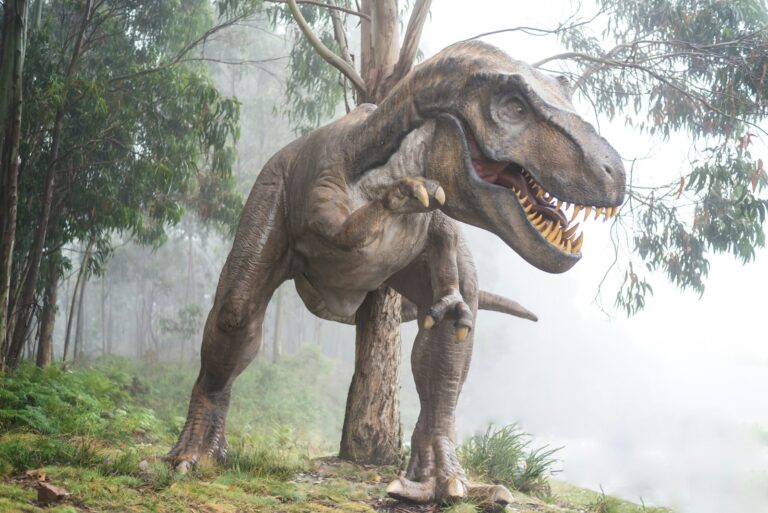
The World That Might Have Kept Its Giants
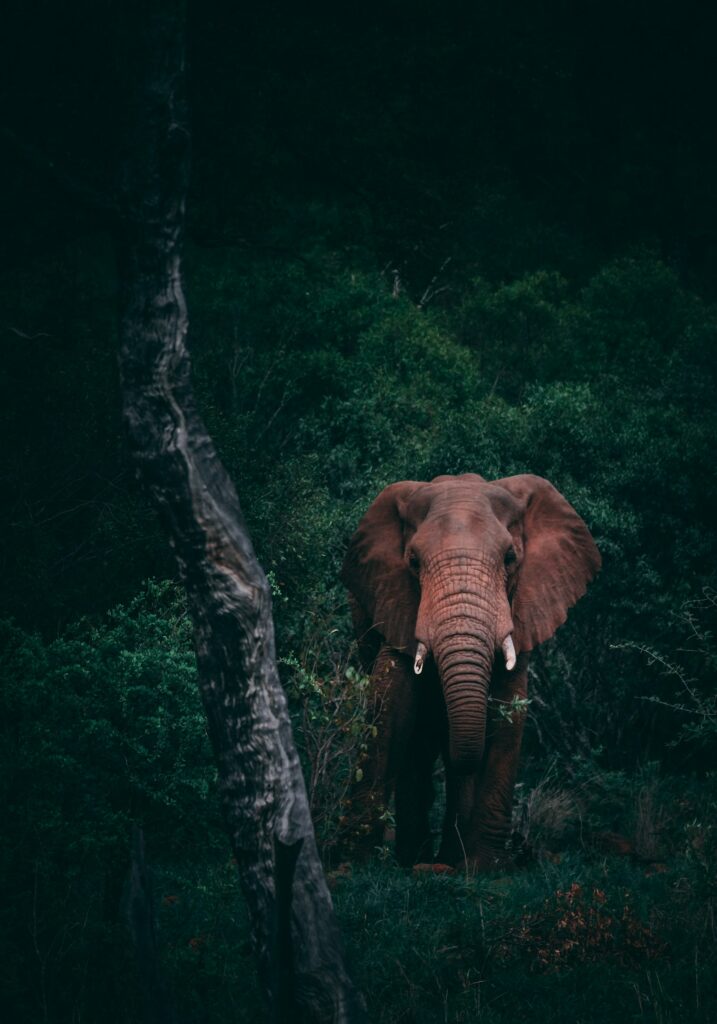
Imagine waking up in a world where the largest mammals of the Ice Age never vanished. Mammoths still cross northern grasslands. Native horses move across the plains of North America. Giant sloths browse at the edge of tropical forests, while formidable predators follow the herds. This would not simply be a more spectacular version of the modern world. It would be a different ecological and human system, shaped by animals whose daily lives could redirect rivers, open forests, transport seeds, and determine where people could safely live.
A disappearance unlike any other
Between the late Pleistocene and the early Holocene, a remarkable share of the world’s large mammals disappeared. Depending on the definition used, close to half of the species above roughly 44 kilograms—or more than two-thirds of their genera—were lost. The pattern is unusually selective: insects, reptiles, fish, and most birds did not suffer a comparable global collapse, while the biggest mammals declined with extraordinary intensity.
Climate played a major role. As the last ice age ended, temperatures and precipitation shifted, ice sheets retreated, and the mammoth steppe contracted. Yet climate alone does not neatly explain the timing and geography of the losses. In many regions, extinctions followed the arrival of modern humans, sometimes after periods of coexistence. North America, Australia, Madagascar, and many Pacific islands lost large portions of their megafauna soon after people arrived. Eurasia, where large mammals had a longer history of living alongside hominins, experienced a slower and less complete decline. Sub-Saharan Africa retained more of its large mammals, though it also suffered losses and population reductions.
The most credible explanation is therefore not a single catastrophe but a combination of pressures: environmental change, shrinking habitat, and human hunting acting on animals that reproduced slowly and needed extensive territory. Small changes in mortality can push a large species below its minimum viable population. Once numbers fall, difficulty finding mates, inbreeding, and the loss of learned social behavior can create a self-reinforcing extinction spiral.
A continent of living giants
Late Pleistocene North America was not a sparsely populated wilderness waiting for modern wildlife to arrive. Mastodons and Columbian mammoths moved through forests and grasslands. Native camels, horses, tapirs, giant ground sloths, and armored glyptodonts occupied different ecological roles. Smilodon, the dire wolf, the giant jaguar, and the short-faced bear formed a powerful carnivore guild that competed for prey and carcasses.
South America had its own distinctive assemblage, including macraucheniids, litopterns, notoungulates, and giant ground sloths. Across Eurasia, the mammoth steppe stretched from western Europe to Siberia, supporting woolly mammoths, woolly rhinoceroses, steppe bison, cave lions, and cave bears. Australia supported giant marsupials such as diprotodonts and enormous kangaroos. These were not marginal survivors. They were the central biological machinery of their landscapes.
The survival of isolated populations shows that extinction was neither instantaneous nor inevitable everywhere. Woolly mammoths persisted on Wrangel Island for thousands of years after their continental relatives disappeared, surviving until roughly four thousand years ago. The American horse disappeared from its native continent but continued in Eurasia, where its descendants were later reintroduced by Europeans. These refuges reveal how geography, human access, population size, and local resources could change the outcome.
What giants do to landscapes
Large herbivores are more than consumers of vegetation. They are ecosystem engineers. An elephant pushing over a tree creates light, deadwood, exposed mineral soil, and shelter for smaller organisms. A mammoth moving through a river corridor could clear vegetation, alter drainage, and create paths used by other animals. Giant sloths may have excavated roots and disturbed soil; glyptodonts and other heavy grazers likely influenced the balance between grassland and woody plants.
They also carry the future of forests in their digestive systems. Many plants produce large fruits or seeds that appear adapted to animals capable of swallowing them and transporting them over long distances. With those dispersers gone, some plants became ecological anachronisms: still alive, but reproducing less effectively than they did when herds moved across continents. A surviving megafauna would have created longer, more dynamic seed corridors and probably a more varied mosaic of vegetation.
The result would not be a uniformly greener planet. Large animals can destroy vegetation as well as promote it. Their importance lies in disturbance and variation. They keep some areas open, allow others to regenerate, redistribute nutrients, and prevent a single plant community from dominating every part of a landscape.
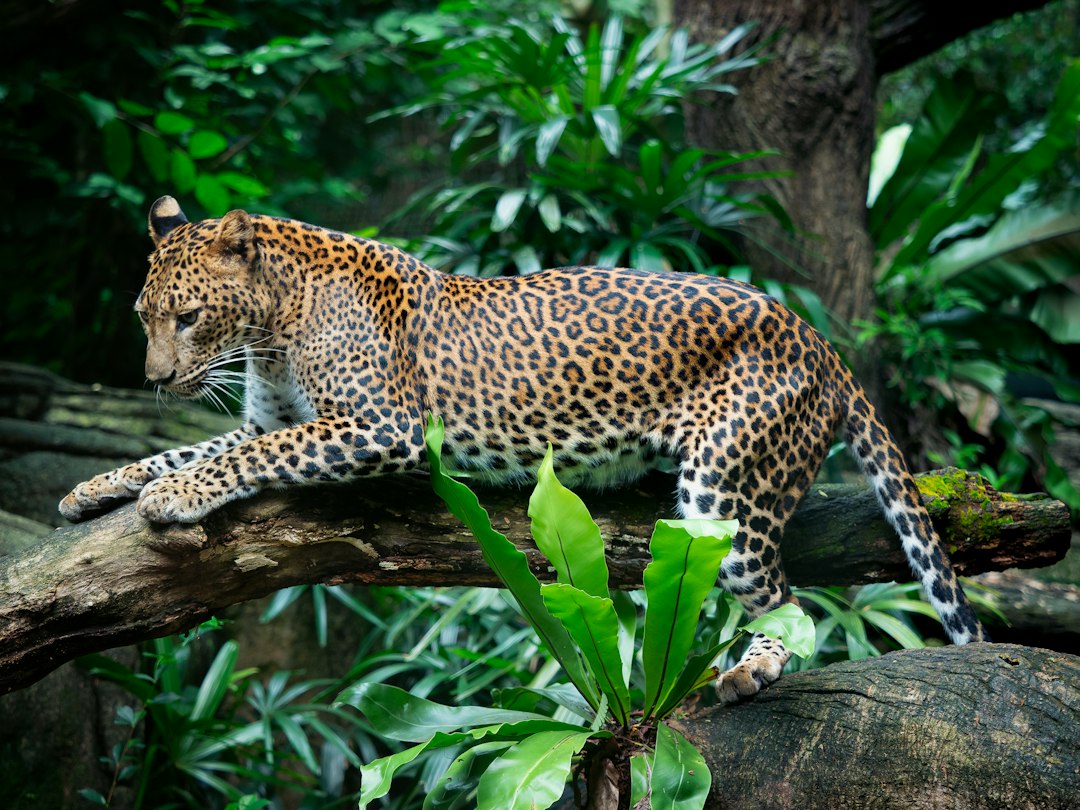
Predators and the landscape of fear
Herbivores are shaped not only by food but also by the threat of being eaten. A full Pleistocene predator guild would have included large cats such as Smilodon, robust canids such as the dire wolf, and giant bears that could hunt, scavenge, or displace other carnivores. Their influence would have extended beyond the number of prey they killed.
Ecologists describe this behavioral effect as a landscape of fear. When predators are present, herbivores move more often, avoid exposed corridors, and spend less time overgrazing the same locations. Modern examples, including the reintroduction of wolves to Yellowstone, suggest that predator recovery can contribute to changes in browsing pressure, vegetation, erosion, and riverbank stability—although these effects interact with climate, hydrology, beavers, and many other factors. A complete Ice Age predator community would have extended that dynamic across much larger landscapes.
A different human history
A world with surviving giants would also have demanded a different civilization. People would still hunt, trade, cultivate plants, and build settlements, but the presence of large animals would shape every decision. Seasonal movements might follow mammoth or horse herds. Corridors used by migrating animals would compete with roads, fields, and cities. Storage buildings and crops would need protection from animals capable of dismantling fences and consuming a family’s harvest in a single night.
Some surviving species might eventually have entered relationships with people. Native horses or American camels, given thousands of additional years of coexistence, could conceivably have been managed or domesticated in some regions. That outcome would not be guaranteed: domestication depends on social behavior, diet, reproduction, temperament, and the economic needs of human communities. Still, access to large animals for transport, traction, or food could have altered trade networks, mobility, political organization, and the development of agriculture.
Those benefits would have come with serious costs. Modern communities living near elephants, lions, and other large animals already face crop losses, livestock predation, injury, and death. A world containing mammoths, giant sloths, and enormous carnivores would have had a much higher cost of settlement. Human societies might have developed stronger systems for compensation, protected corridors, seasonal land sharing, and collective defense. Expansion could have been slower in some regions—not necessarily because people were less capable, but because the landscape itself imposed limits.
Can lost functions return?
The disappearance of the giants is ancient, but the ecological consequences remain relevant. Conservationists are restoring large herbivores and predators to places where their functions have been missing. European bison, primitive horses, and other grazers are being used in rewilding projects to increase habitat diversity. In Siberia, experiments such as Pleistocene Park test whether intensive grazing can change snow cover, vegetation, and the thermal behavior of permafrost. The proposed climate effect is potentially meaningful but remains dependent on animal density and scale; it would complement, not replace, rapid reductions in fossil-fuel emissions.
Biotechnology companies are also exploring whether elephant genomes could be edited to produce cold-adapted animals with some mammoth-like traits. This is a formidable scientific and ethical challenge. Creating a viable animal is only one step; developing appropriate behavior, social knowledge, habitat, and long-term welfare would be equally difficult. Functional replacement through living species is more immediate than recreating extinct animals, but it too requires careful ecological assessment.
The choice behind the counterfactual
If the Ice Age giants had survived, Earth might have been more heterogeneous, more biologically connected, and more resilient in some places. It would also have been more dangerous, more difficult to cultivate, and less available for unrestricted human expansion. The alternate world is not a utopia. It is a reminder that ecological richness carries obligations as well as benefits.
The deeper lesson is that extinction removed an architecture, not merely a list of species. Plants, herbivores, predators, soils, rivers, and human communities had evolved around one another for millions of years. Restoring even fragments of that architecture will require patience, evidence, and a willingness to share landscapes with animals that can genuinely change them. The future of rewilding is not about recreating the past perfectly. It is about deciding which lost relationships—and which living ones—we are prepared to make room for again.
We aim to distinguish established evidence from interpretation, identify uncertainty where it matters, and revise articles when stronger evidence changes the picture. If you spot an error or have a better source, contact support@walkingmoda.com.